


Ms. Tanusri Tarafder
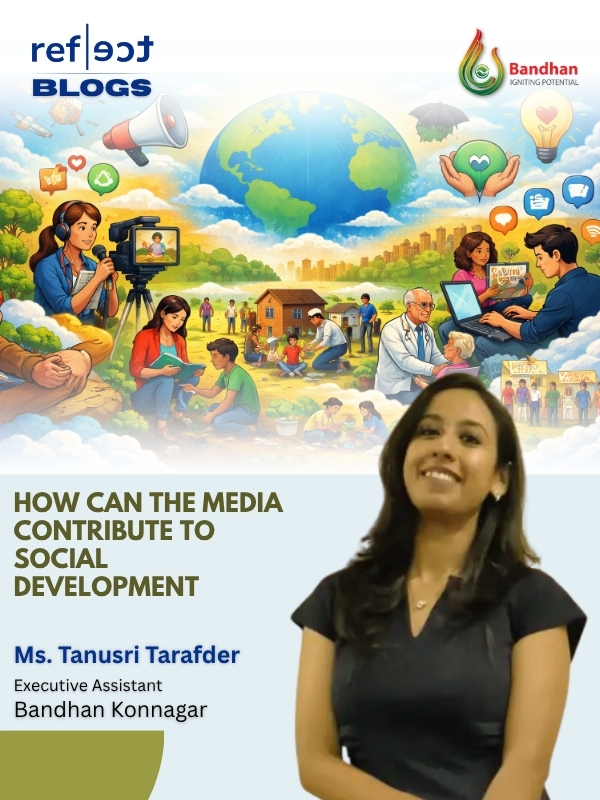
Media as a Pillar of Social Development – In the contemporary global order, the media have transcended their conventional role as a transmitter of information and emerged as a critical institution shaping social development. The expansion of digital platforms, coupled with the persistence of traditional media, has transformed public discourse by influencing perceptions, mobilizing collective action, and holding institutions accountable.
In an era characterized by complex socio-economic challenges such as climate change, public health crises, and democratic backsliding, the media increasingly function as an intermediary between the state and society, thereby playing a decisive role in fostering informed citizenship and social transformation.
Building Awareness and Driving Global Movements – One of the most profound contributions of media to social development lies in its capacity to construct and disseminate social awareness at both national and transnational levels.
Movements such as ‘Fridays for Future’ demonstrate how sustained media coverage can convert localized dissent into a global moral discourse. Primarily led by young activists, the movement gained legitimacy through international news reportage and social media amplification, compelling governments to acknowledge climate change as an urgent policy priority.
In this context, the media did not merely report events but actively shaped the framing of environmental degradation as an issue of intergenerational equity and human security.
Advancing Public Health and Social Welfare – The media has also played a pivotal role in advancing public health and social welfare, particularly during recent global crises.
The COVID-19 pandemic underscored the significance of credible media in disseminating accurate scientific information, combating misinformation, and fostering public adherence to health advisories. Countries such as South Korea, India, and the United Kingdom effectively utilized multimedia campaigns to promote vaccination drives and mental health awareness.
Simultaneously, the rise of digital educational platforms expanded access to learning resources, especially in regions with infrastructural limitations, contributing to long-term human capital formation.
Promoting Democracy and Social Justice – Furthermore, the media have increasingly functioned as an enabler of democratic participation and social justice.
Global movements like #BlackLivesMatter and #MeToo illustrate how digital media can amplify marginalized voices and challenge systemic inequalities. Investigative journalism and citizen-led narratives have exposed institutional failures, leading to judicial inquiries, policy debates, and legislative reforms. These developments reaffirm the media’s role as a watchdog, strengthening democratic accountability beyond electoral processes.
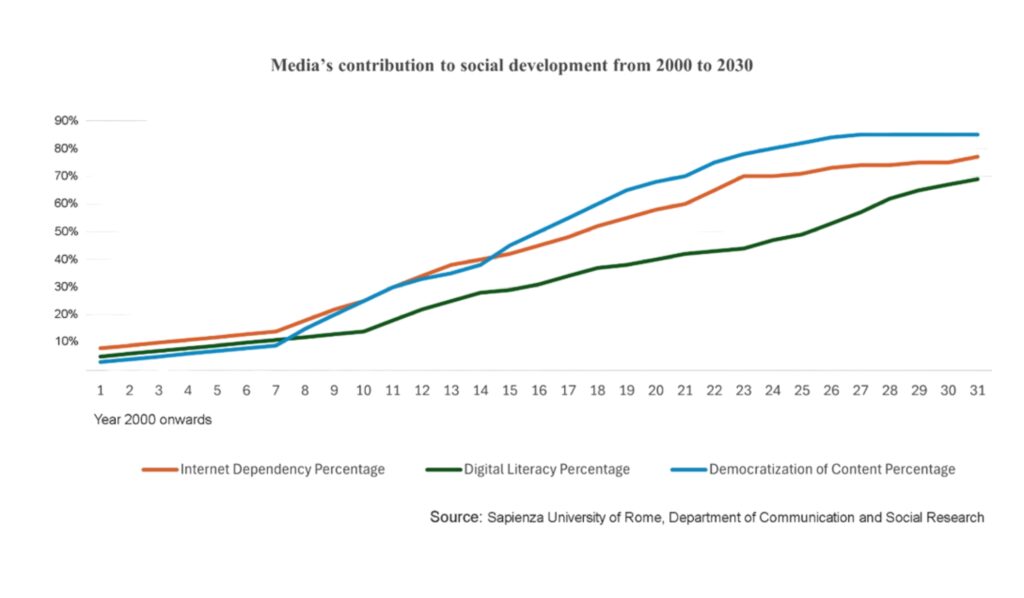
Growth of Media Influence in the Digital Age – The steady rise in media’s contribution to social development reflects increased internet penetration, digital literacy, and the democratization of content creation.
This upward trajectory highlights the growing influence of mass-generated content and suggests deeper integration of media into governance, education, and social mobilization. As technology continues to evolve, media’s role in shaping societal outcomes is expected to expand further.
Challenges: Misinformation and Polarization – However, this expanding influence is not without challenges.
The proliferation of misinformation, algorithm-driven polarization, and sensationalist content has undermined social cohesion and eroded trust in democratic institutions. Instances of fake news during elections and public health emergencies demonstrate how unregulated media can distort reality and intensify social divisions.
These concerns underscore the need for media literacy, ethical journalism, and effective regulatory frameworks.
A Double-Edged Instrument – In summary, the media serve as a double-edged instrument in the process of social development. While its ability to inform, mobilize, and empower has strengthened civic engagement and social reform, its unchecked excesses pose significant risks to democratic stability.
The future of social development depends not only on the expansion of media platforms but also on their responsible use—ensuring that media continues to act as a catalyst for inclusive growth, informed discourse, and sustainable progress.